Making knowledge bottlenecks visible reveals how specialization blocks high-priority work by showing the disparity between non-specialist and specialist tasks in a shared backlog.
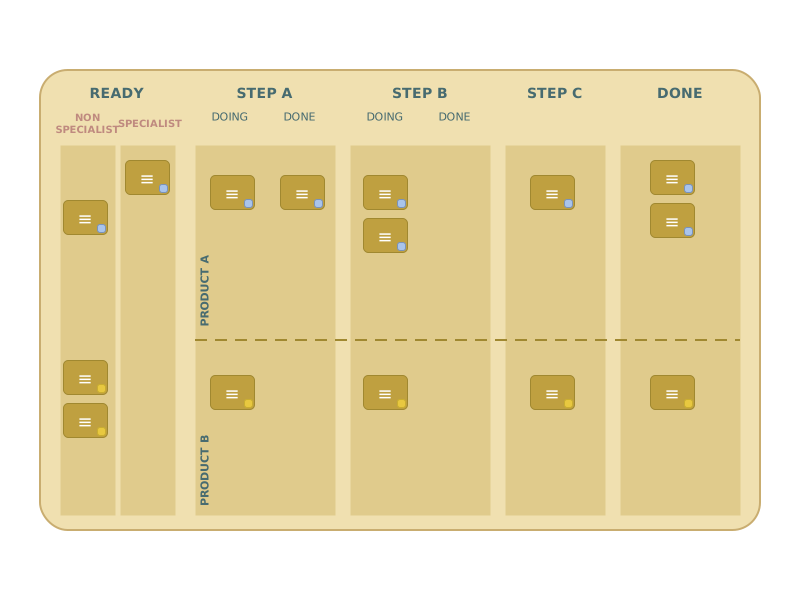
The most important work isn't getting done. And nobody can see why.
This pattern reveals where specialization prevents optimal prioritization — making visible which high-priority work is blocked because the required knowledge is held by only a few people.
The Problem
The team has capacity. The backlog has items. But the highest-priority work requires a specialist — and the specialist is unavailable. In separate per-product backlogs, this is invisible. The team looks busy. The most important thing isn't moving.
How It Works
Instead of separate backlogs per product or team, a shared backlog is created, prioritized by business value. The backlog is split into two sub-columns: Non-Specialist (items that anyone can work on) and Specialist (items that require specific knowledge). Now it's visible: non-specialists have capacity, but the most valuable work is locked behind specialist knowledge. The bottleneck is undeniable — and the conversation about cross-training can begin.
When to Use It
- Specialization is preventing optimal prioritization
- Teams can only handle certain types of work
- You suspect the highest-priority items are not getting worked on — but can't prove it
Related Patterns
- Swimlanes for Flight Items — separate swimlanes hide the problem; a shared backlog reveals it
- WIP Limits — reducing WIP helps only when work can actually be picked up; knowledge bottlenecks block this
Your play!
Get the cards and maps — all 18 FL2 Flow Patterns plus the new "Identify your Flow" companion map (A3 + A2 in EN, A3 in DE), ready to use in your next FL2 workshop or board design session.