Meeting Containers bundle related interactions by shared participants, sequential dependencies, or common purpose to make meetings more efficient.
Core Question: How do we bundle interactions meaningfully?
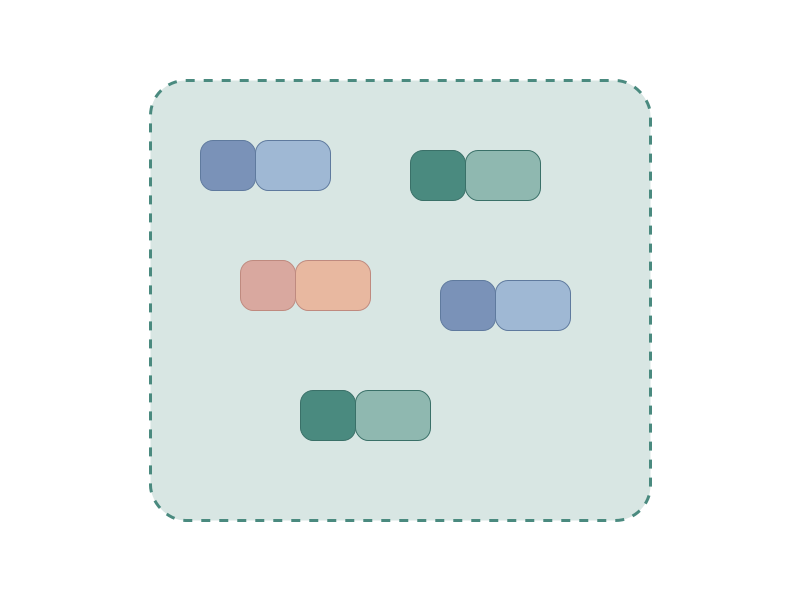
Most meetings start with format — "We need a standup" — and then figure out what happens inside. Meeting Containers flip this. You start with Interactions, then bundle those that share participants, sequential dependencies, or a common purpose into a container. The name follows the design, not the other way around.
This means a "Daily Standup" is really a container that bundles sync, focus, and blocker management Interactions. A "Sprint Planning" is a container bundling goal setting, work selection, task breakdown, and commitment. When you see meetings as containers for Interactions, you can evaluate whether each Interaction belongs there — and whether the container is still fit for purpose.
Details
Purpose-Driven Bundling
Interactions are bundled into containers based on three criteria:
- Shared participants — the people are already together, so it's efficient to combine Interactions
- Sequential dependency — Interaction B needs the output of Interaction A, so they belong in sequence
- Common purpose — all Interactions contribute to the same outcome
This creates efficient, coherent meetings where every minute serves the container's purpose. If an Interaction doesn't meet any of these criteria, it probably belongs in a different container.
Practical Examples
Daily Standup Container bundles:
- Sync: prioritize orders (5 min)
- Focus: identify priorities (5 min)
- Blocker Management: surface and assign blockers (3–5 min)
- Check-out (1 min)
- Total: 15–20 minutes
Sprint Planning Container bundles:
- Goal Setting: clarify sprint goal (20–30 min)
- Work Selection: select stories (30–60 min)
- Task Breakdown: break into tasks (30–40 min)
- Commitment: commit and review risks (20–30 min)
- Total: 2–4 hours
FL2 Delivery Planning Container bundles coordination Interactions across teams — epic status review, dependency management, priority decisions.
Smells — When to Look Closer
- Naming containers by format ("Standup") instead of by purpose ("Daily Sync & Focus") — the name should reflect what the container achieves
- Bundling unrelated Interactions just because people are available — convenience isn't a design criterion
- One giant container that tries to do everything — leads to meeting fatigue and loss of focus
- No clear outcome — people leave unsure what was accomplished
Related Patterns
- Interactions are the building bricks that containers bundle
- Meeting Cadence defines when and how often containers occur
- Meeting Canvas makes the container's design explicit
Your play!
If you want to use this in your worksystems-design sessions, here is all the material you need.
More about this
These patterns are part of the Flight Levels thinking and design model. If you want to learn more, take the Kick start path to Flight Levels Now!