W³ is a reflective framework that separates facts, meaning, and actions to facilitate learning from significant events.

Three phases, strictly separated. Facts. Meaning. Action.
First: what actually happened? (no interpretation). Then: what does it mean? (patterns and implications). Finally: what do we do now? (concrete actions). Most teams jump straight to “Now What?” and wonder why nothing changes.
- Enforces the discipline of separating observation from interpretation
- Each phase builds on the previous — actions are grounded in meaning, which is grounded in facts
- Prevents premature solutions that skip the sense-making step
When to Use
After any significant event, experience, or time period that deserves reflection. Sprint reviews, project retrospectives, after a workshop, after a market shift — whenever you need to learn from what happened before deciding what’s next.
How It Works
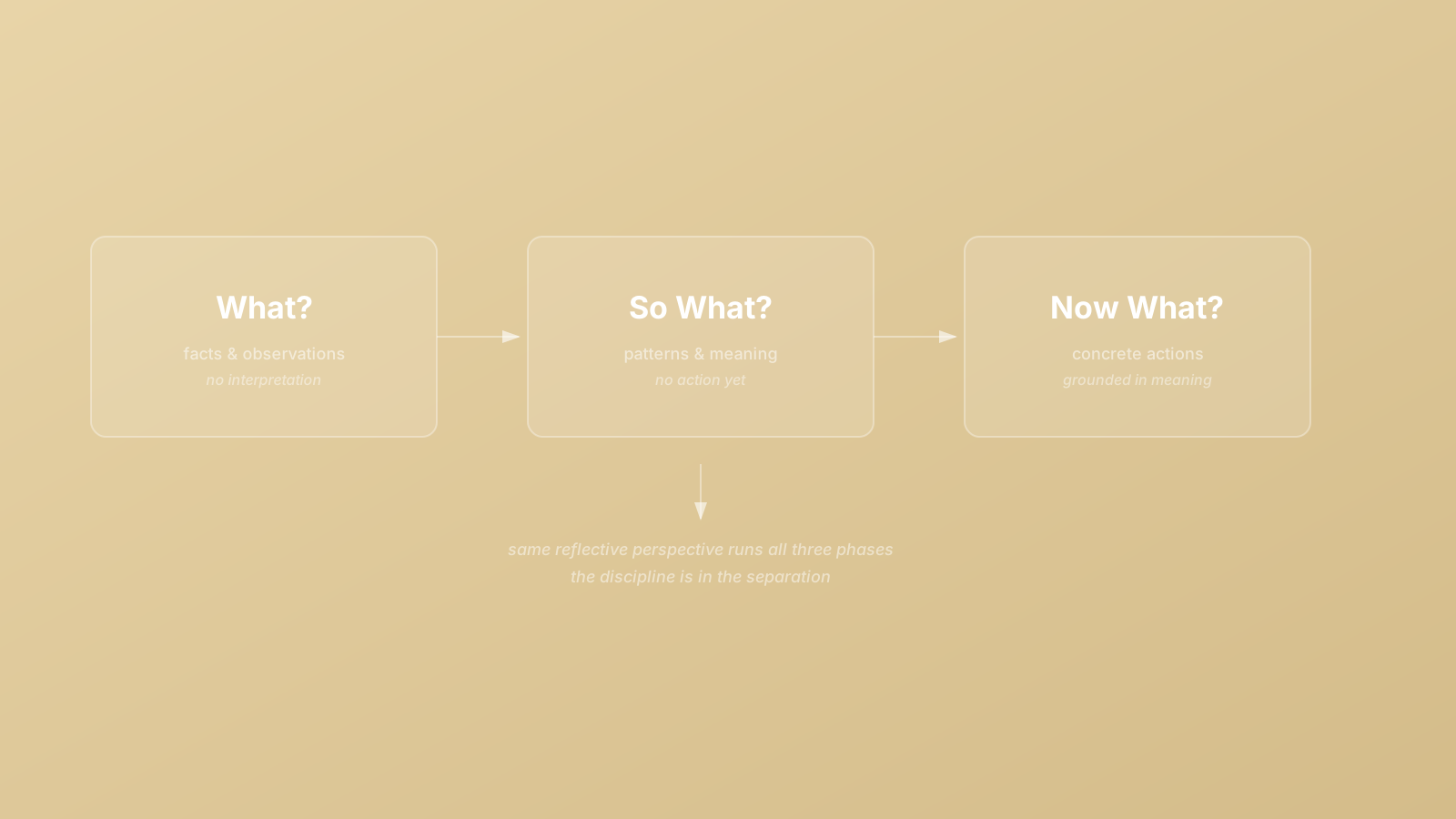
Three phases in strict sequence:
- What? — Facts and observations only. What actually happened? What did people say and do? What was visible? No interpretation, no judgment.
- So What? — Now interpret. What patterns do you see? Why does this matter? What hypotheses emerge? What’s surprising?
- Now What? — Based on the meaning you’ve made, what concrete actions follow? What will you start, stop, or continue?
The same reflective perspective runs all three phases — the discipline is in the strict separation between observation, interpretation, and action.
What You Get
A clear progression from facts through meaning to action. You’ll have documented what actually happened (not just what you remember), what it means (not just your first reaction), and what to do about it (grounded in actual understanding, not impulse).
Related Methods
- Six Thinking Hats — when you want even more distinct perspectives on a situation
- Disney Creative Strategy — when the “Now What?” needs creative vision
- Pre-Mortem Analysis — when you want to stress-test the “Now What?” actions
/libertee:w3 "your event or experience"