A planning pattern for uncertain workflows using three time horizons: Now, Next, and Later.
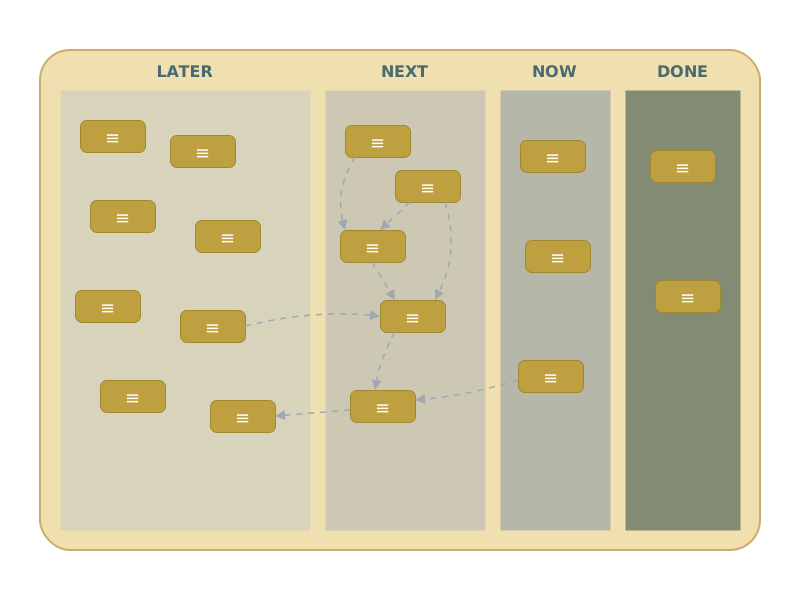
When the workflow is uncertain, plan with time horizons instead.
A planning pattern for environments with high uncertainty. Instead of a defined workflow, the board uses three time horizons: what is being done now, what comes next by a specific date, and what might come later.
The Problem
Not every type of work fits a defined workflow. Research, innovation projects, exploratory initiatives — they don't have predictable steps. Forcing them into a workflow board creates constant re-planning, frustration, and fake precision.
How It Works
Instead of process steps, the board uses three time horizons: Later, Until [concrete date], Now, and Done. Concrete dates are used — not relative references like "in 3 months" but "Until Q2" or "by March 31st." Dependency arrows connect items to show what blocks what. The board expects new work to emerge during the process — that's a feature, not a bug.
When to Use It
- High uncertainty — the path forward is unclear or will change
- Exploratory or innovative work where exact steps can't be predicted in advance
- Time horizons matter more than process steps
- New work regularly appears while existing work is in progress
Related Patterns
- Outcome vs. Output — even work in uncertain environments should track whether it created value
Your play!
Get the cards and maps — all 18 FL2 Flow Patterns plus the new "Identify your Flow" companion map (A3 + A2 in EN, A3 in DE), ready to use in your next FL2 workshop or board design session.