Sequential handoff pattern for FL2 teams that makes epic dependencies visible and manageable.
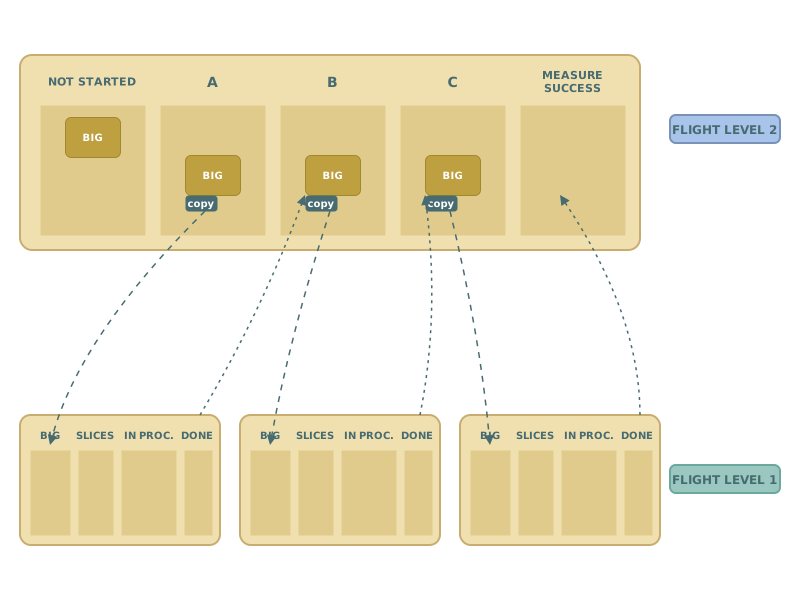
Teams that must work one after another. Made visible, made manageable.
This pattern describes how FL2 and FL1 connect when teams must work on an epic sequentially — where the output of one team is the direct input for the next.
The Problem
Some epics can't be parallelized. Team B needs Team A's output before it can start. Team C needs Team B's. Without a clear handoff structure on the FL2 board, these sequential dependencies are invisible — and delays cascade silently.
How It Works
The FL2 board has dedicated columns for each team in the sequence. A copy of the epic goes first to Team A. When Team A finishes, the copy moves to Team B. When Team B finishes, on to Team C. Each transition is a visible handoff on the FL2 board. The board shows exactly where the epic is in the chain, which team is currently responsible, and where handoffs have happened — or stalled.
When to Use It
- Teams cannot work in parallel due to hard dependencies
- The output of one team is the direct input for the next
- Cascading delays are a recurring problem and need to be made visible
Related Patterns
- Connecting FL — the base pattern this extends for the sequential case
- Connecting FL Parallel — the alternative when teams can work independently
Your play!
Get the cards and maps — all 18 FL2 Flow Patterns plus the new "Identify your Flow" companion map (A3 + A2 in EN, A3 in DE), ready to use in your next FL2 workshop or board design session.