Analyzes existing meetings to identify actual interactions, purposes, and problems for purposeful redesign.
Core Question: We have existing meetings — what interactions are actually happening in them?
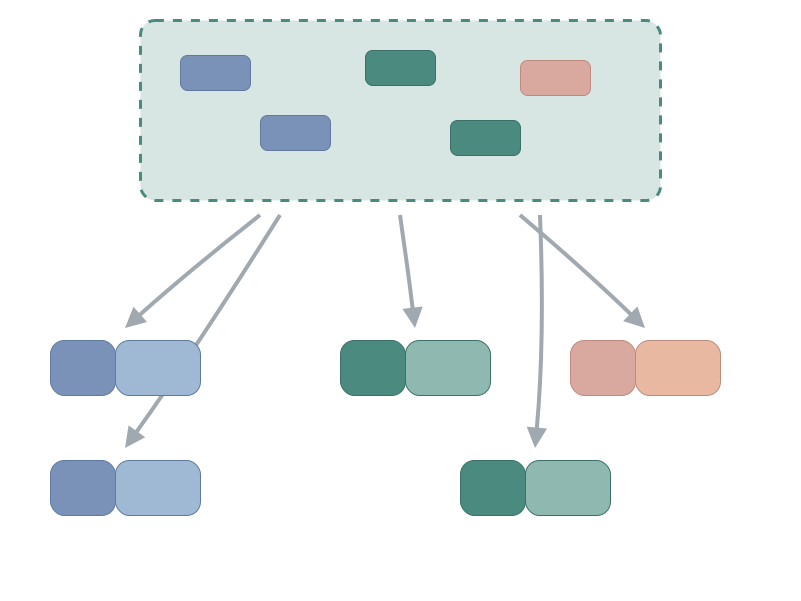
Most organizations don't start from scratch. Meetings already exist — established at some point, perhaps for good reasons, and evolved (or calcified) over time. Before designing new interactions, you need to understand what you already have.
The approach is explicit: observe what actually happens in a meeting (not what the agenda says), identify the individual Interactions using verb-noun naming, map their purposes, timing, and participants, then look for problems. Interactions that take too long, Interactions that are missing, Interactions that are redundant across meetings, Interactions where the wrong people are in the room. This analysis creates the foundation for purposeful redesign.
Details
Decompose Before You Redesign
The decomposition follows a systematic approach:
- List all current meetings — create a complete inventory
- Observe what actually happens in each (not what the agenda says)
- Name each Interaction with verb-noun (the Interactions pattern's approach)
- Map purpose, duration, participants, and outcomes per Interaction
- Identify problems: too long, missing, redundant, wrong participants
- Cluster Interactions by theme to see natural groupings
- Compare with what the board actually needs (Board → Interactions)
The key is step 2: observe what actually happens, not what the agenda says should happen. The map is not the territory.
Practical Examples
Decomposing a 30-minute Daily Standup: Observation reveals 5 actual Interactions:
- "Share announcements" (2 min)
- "Report individual progress" (15 min — each person gives a full narrative)
- "Identify blockers" (3 min)
- "Discuss blocker in detail" (5 min)
- "Random off-topic discussion" (5 min)
Analysis: Individual progress reports are too long and not board-centered. Random discussion wastes time. A focus-setting Interaction is missing entirely. Recommendation: Replace individual reports with board-centered status review (5 min), keep blocker identification, add focus setting, eliminate off-topic — target 15 minutes instead of 30.
Decomposing a 4-hour Sprint Planning: Reveals 8 distinct Interactions including story selection, task breakdown, estimation, and assignment. Analysis shows: task breakdown takes 80 minutes because stories weren't refined beforehand (a Refinement interaction is missing from the system). Estimation happens separately from breakdown (could be combined). All 8 people participate in every Interaction (not all needed everywhere).
Smells — When to Look Closer
- Analyzing the agenda instead of what actually happens — the agenda is aspirational, observation reveals reality
- Decomposing once but never acting on the findings — analysis without redesign is wasted effort
- Skipping the observation step — assuming you know what happens in a meeting without watching it leads to redesigning based on assumptions
- Trying to fix meetings without understanding their Interactions first — rearranging deck chairs instead of addressing root causes
Related Patterns
- Interactions provides the naming approach for decomposition
- Board → Interactions gives the comparison baseline — what should the interactions be?
- Meeting Container is the redesign target — after decomposing, you rebuild purposefully
Your play!
If you want to use this in your worksystems-design sessions, here is all the material you need.
More about this
These patterns are part of the Flight Levels thinking and design model. If you want to learn more, take the Kick start path to Flight Levels Now!