The Interactions Network illustrates how information flows between meetings, emphasizing connections and feedback loops across different levels of an organization.
Core Question: How does information flow between meetings?
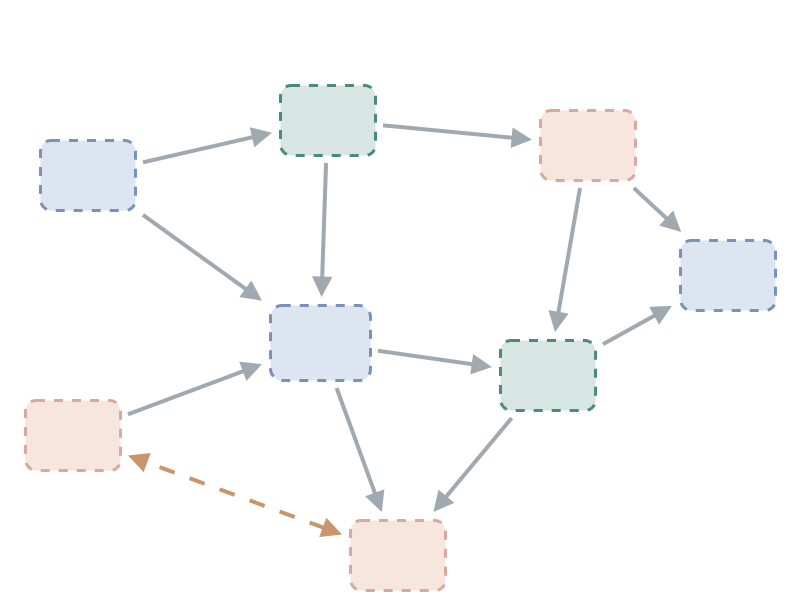
Individual meetings don't exist in isolation. The output of a Daily Standup (blockers identified) feeds into the weekly Refinement. Sprint Planning outputs feed into the FL2 Weekly Sync. FL2 Delivery Planning translates FL3 strategic direction into executable plans. While Meeting Containers define what happens inside a meeting and Meeting Cadence defines the temporal rhythm, the Interactions Network shows how meetings relate to each other.
Information flows in three directions: bottom-up (operational results inform strategy), top-down (strategic decisions guide execution), and lateral (peer systems coordinate dependencies). A healthy Interactions Network has clear connections at every level and between levels — no meeting exists in isolation.
Details
Connected System with Cross-Level Flow
The network has three types of connections:
Vertical (cross-level):
- Upward aggregation: FL1 Standup → FL2 Sync → FL3 Review
- Downward translation: FL3 Strategy → FL2 Delivery Plan → FL1 Sprint Backlog
Lateral (same level):
- Team A Standup ↔ Team B Standup for dependency management
Feedback loops:
- Results flow back to inform planning, creating continuous learning cycles
Practical Examples
Simple FL1 Network:
Daily Standup → Refinement (blockers inform what to clarify) → Sprint Planning (ready stories inform selection) → Daily Standup (sprint backlog guides daily work). In parallel: Demo → Retrospective (feedback informs reflection) → Sprint Planning (improvements applied).
Cross-level flow in action:
FL1 teams identify a recurring blocker → FL2 weekly sync escalates it → FL3 quarterly review adjusts strategy → FL2 changes delivery plan → FL1 teams get unblocked. The information traveled up, triggered a decision, and the effect traveled back down.
Smells — When to Look Closer
- Isolated meetings with no defined inputs or outputs — information dies in the room
- Missing cross-level connections — FL1 teams work without strategic context, FL3 decides without operational insight
- No feedback loops — strategy never learns from execution, the same problems recur
- Over-connected network — every meeting feeds every other meeting, causing information overload and decision paralysis
Related Patterns
- Meeting Cadence defines the temporal rhythm of the network
- Meeting Canvas makes each meeting's inputs and outputs explicit
- Board ↔ Meeting Alignment ensures the network reflects the actual work system
Your play!
If you want to use this in your worksystems-design sessions, here is all the material you need.
More about this
These patterns are part of the Flight Levels thinking and design model. If you want to learn more, take the Kick start path to Flight Levels Now!