FL2 coordination discipline prepares organizations for AI by making topics visible and improving cross‑team workflow.
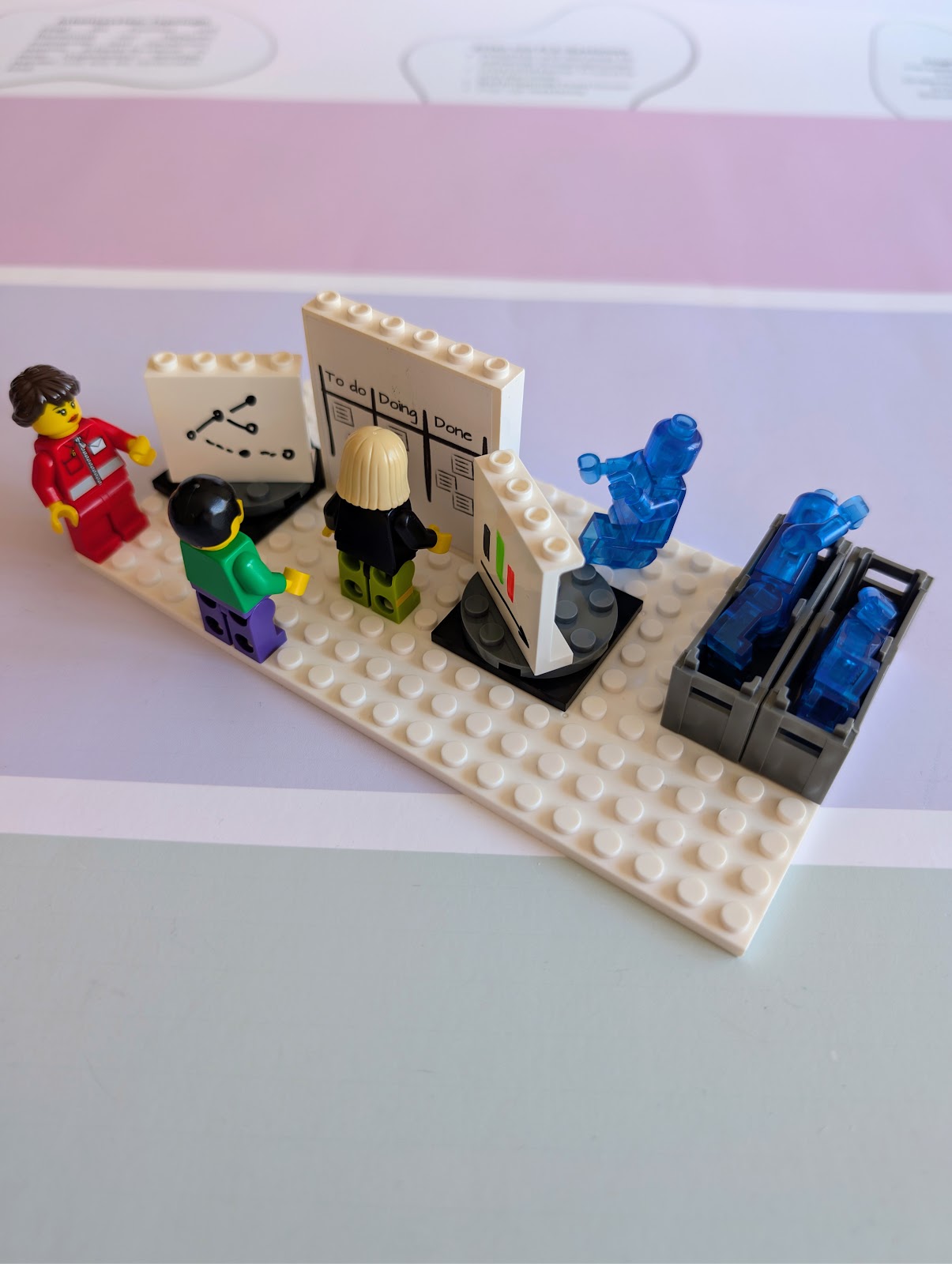
Build the yard before you get the dog. Without FL2 discipline, AI just amplifies the chaos that's already there.
What It Is
A deliberate sequence: before AI docks onto the coordination level, the work system is brought to a state where it can connect at all. Make topics visible, not teams. Cross-team coordination as a discipline. Watch the value flow between the meetings, not just inside them.
The pattern shows up in two variants:
- With AI in view: The organization knows AI is coming and deliberately holds it back. Clean up the yard first, then decide on purpose where AI should dock.
- Independent of AI: The organization works on FL2 out of its own drive, market pressure, a need for speed, regulatory change. AI isn't the driving topic at all. But what emerges is the best preparation for AI you could imagine.
In both cases the same thing happens: the work system is rebuilt so AI can later have leverage instead of amplifying the mess.
The Problem Lives Between the Meetings
A diagnosis that holds in many organizations: with planning, retro, and review alone, we can't get the right people to the right topics at the right time. The problem isn't in the meetings, it's between them.
That's exactly the gap FL2 discipline closes: visible topic status between the sessions, clear escalation paths, regular cross-team sync. A format like an Obeya can carry this, but it isn't the goal. The goal is that coordination happens, stays visible, and makes decisions in the right places.
Why AI Alone Doesn't Create FL2
AI doesn't replace coordination discipline. Put AI agents on top of a level with chaotic topic assignment, unclear dependencies, and invisible value flow, and you accelerate the chaos.
Example: a stand-up tool gets replaced by an AI summary, but nobody clarified which topics the stand-up should serve in the first place. The summary is efficiently generated, the underlying coordination gap remains, just faster now.
Why Now, Not Later
AI is already knocking. It's coming anyway, in tools, in expectations, in processes. Whoever postpones FL2 until "the AI strategy is set" gets not more time, but less room to shape things.
That's exactly why the org work pays off now: while it can still be decided where AI docks usefully, instead of everywhere at once.
How To Spot It
- Topics are made visible (often more than the official teams), cross-team coordination is run as its own discipline
- A central figure facilitates without directing, making visible what otherwise sits scattered
- AI is present in the background but not in the active scene, dosed deliberately rather than rolled out everywhere at once
- Speed comes from leaving things out, not from adding: what's no longer done makes room for what really matters
What To Do (FL2 - Coordination)
- Make topics visible, not teams: Identify the central topics with the most dependencies. Their own boards, their own symbols, their own flow, across the team structure
- A format for the gap between meetings: A place where topic status, bottlenecks, and cross-team decisions are continuously visible. Obeya is a proven form
- Dose AI deliberately: First where the lever is clear. Better to learn cleanly on one topic than run AI pilots everywhere without connection
- Connect with Humans Above the Loop: FL2 visibility is the precondition for humans to oversee the loop at all
The Trap
Expecting AI to replace org design. It automates what's there, for better or worse. Skip the coordination homework and you get faster chaos. Sequence matters, whether or not AI is the explicit driver.